
competition
parand plazza
parand competition
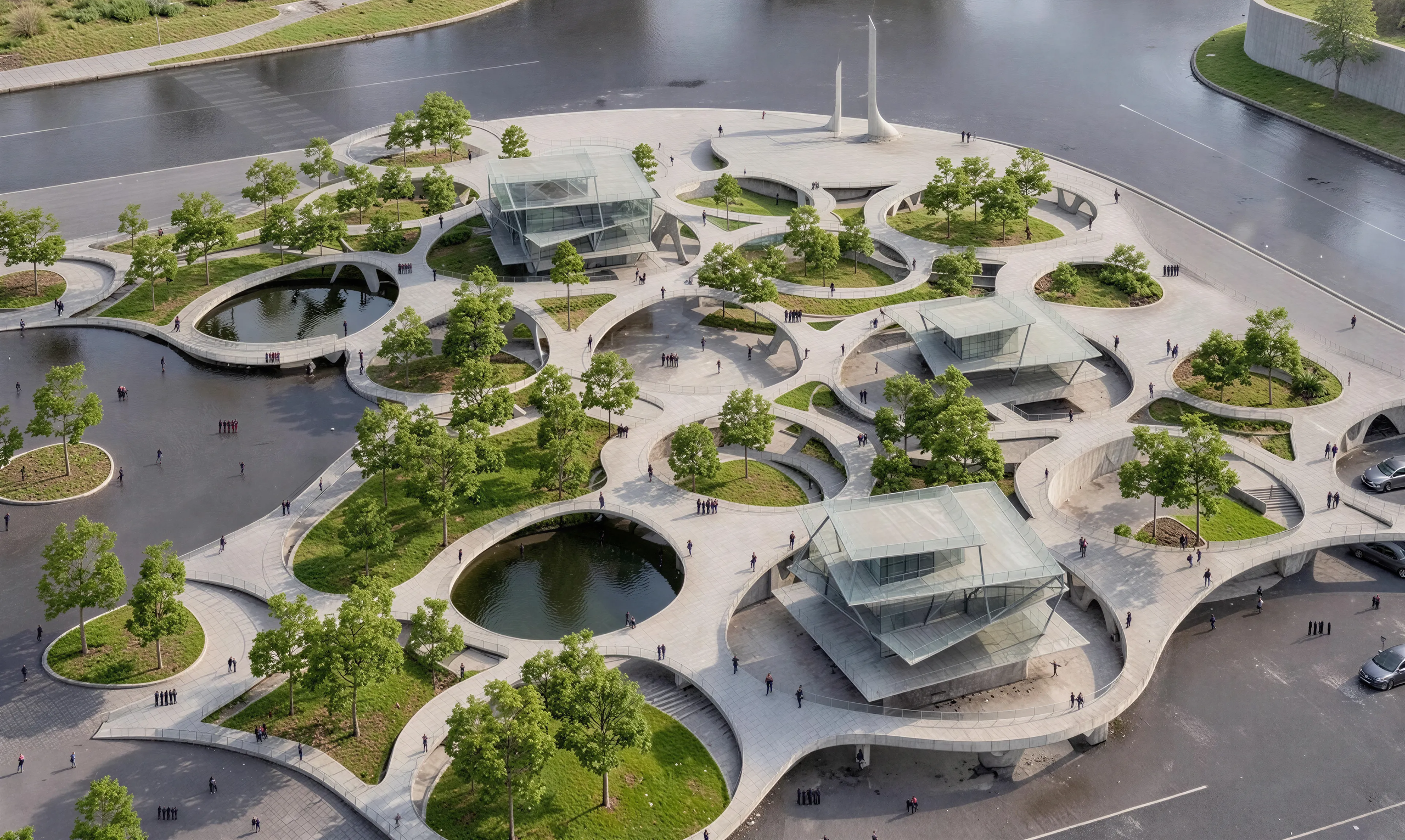
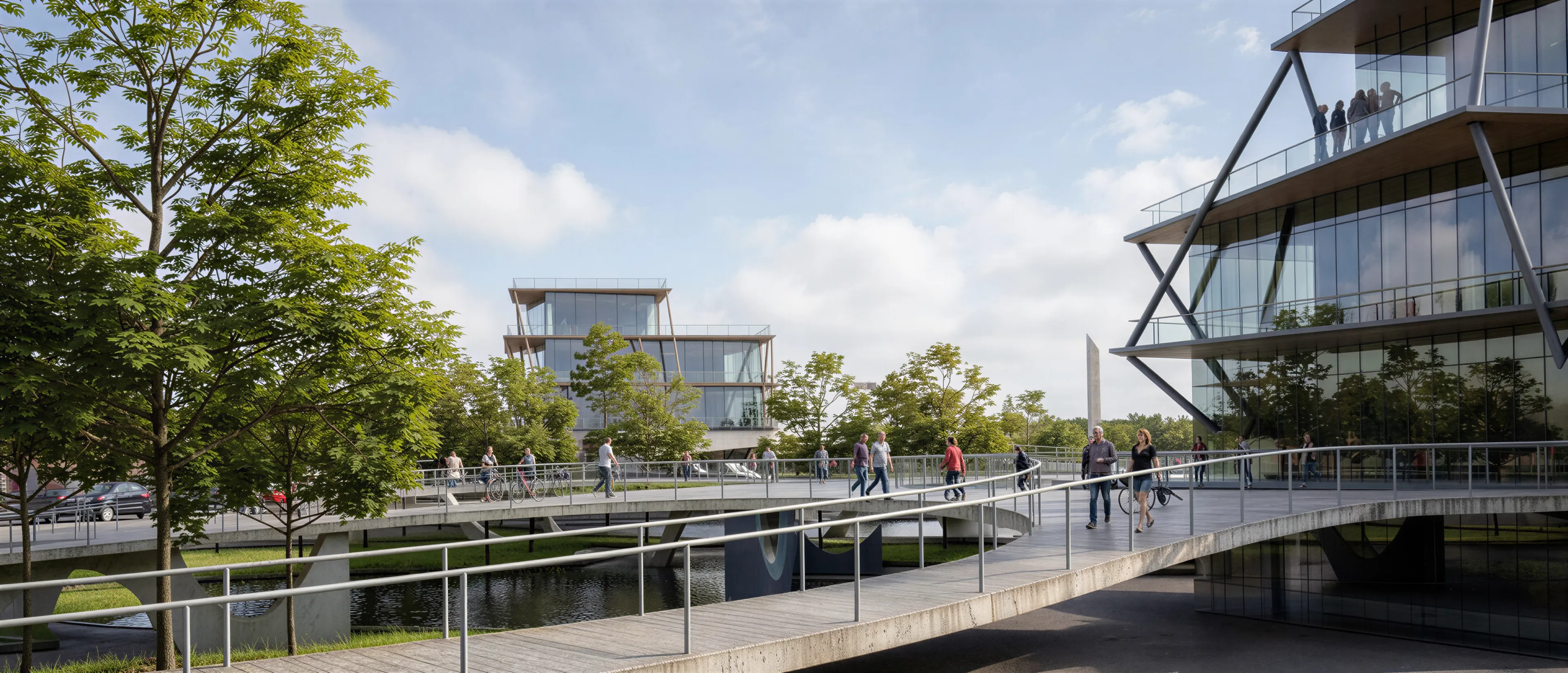
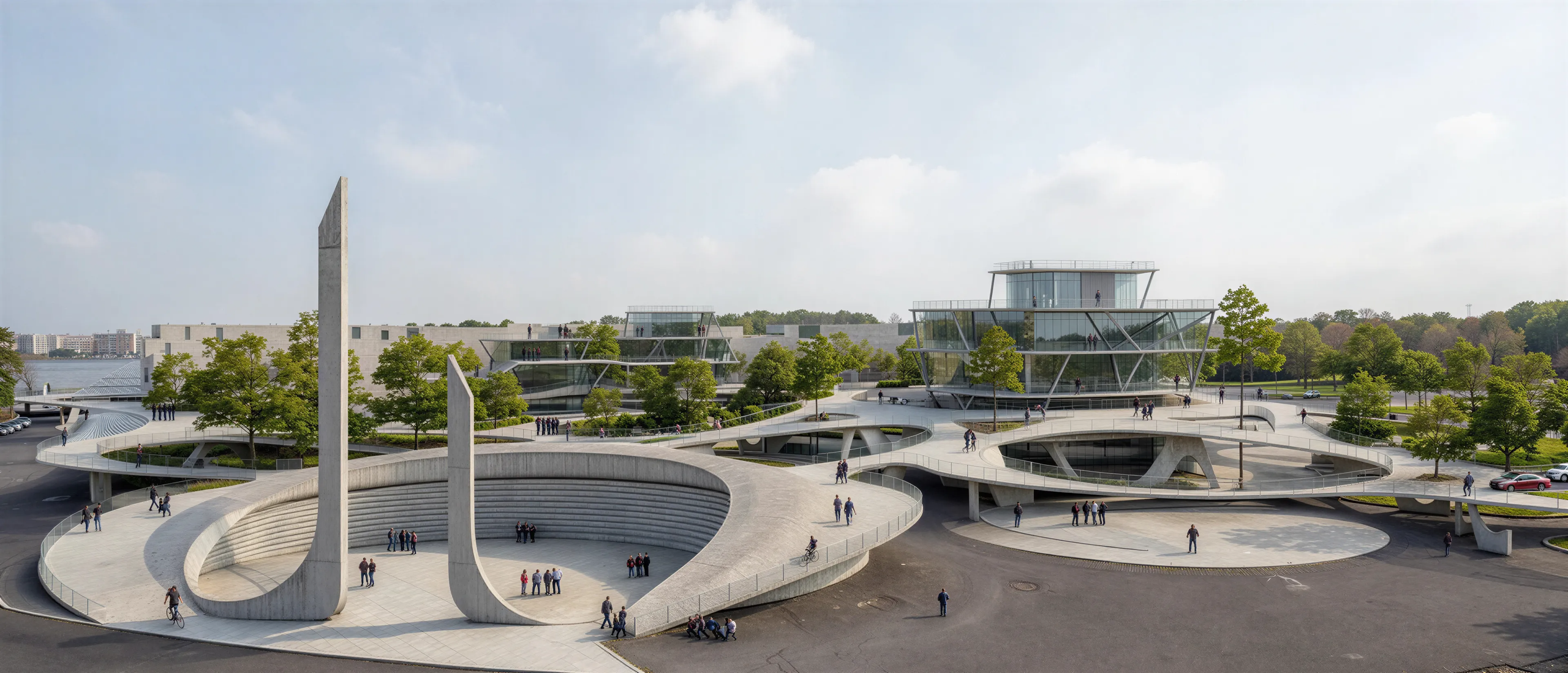
Parand Plaza explores how architecture can contribute to a sense of belonging in a newly established city. The project places human presence at the center of its spatial logic. As the rigid geometric network of the city enters the plaza, it is softened and transformed by human movement. Pedestrian surfaces rise from the ground, suspended bridges emerge, and architectural structures respond to the
- Location
- iran, tehran, parand
- Area
- 30000 m²
- Client
- city of parand
- Typology
- public
- Status
- Concept
The competition called for the design of a plaza for the newly established city of Parand, a city shaped within a relatively short period of time and largely defined by extensive social housing developments. In such a context, the central question was not simply how to design a public space, but how architecture could contribute to creating a sense of belonging and the emergence of a collective identity.
The project began with a simple answer: the human being.
A city without its citizens is little more than an accumulation of buildings and infrastructure. Its identity emerges through the presence, behavior, and interaction of its inhabitants. The question, therefore, was how this presence could move beyond a social concept and become an actual force in the formation of architecture.
Human presence was consequently established as one of the primary organizing forces of the plaza. The rigid geometric network of the city does not simply continue into the public space in its original form. As it enters the plaza, it is transformed by the movement and presence of people. The hard geometry of the city becomes softer and gradually develops into a more fluid and organic structure.
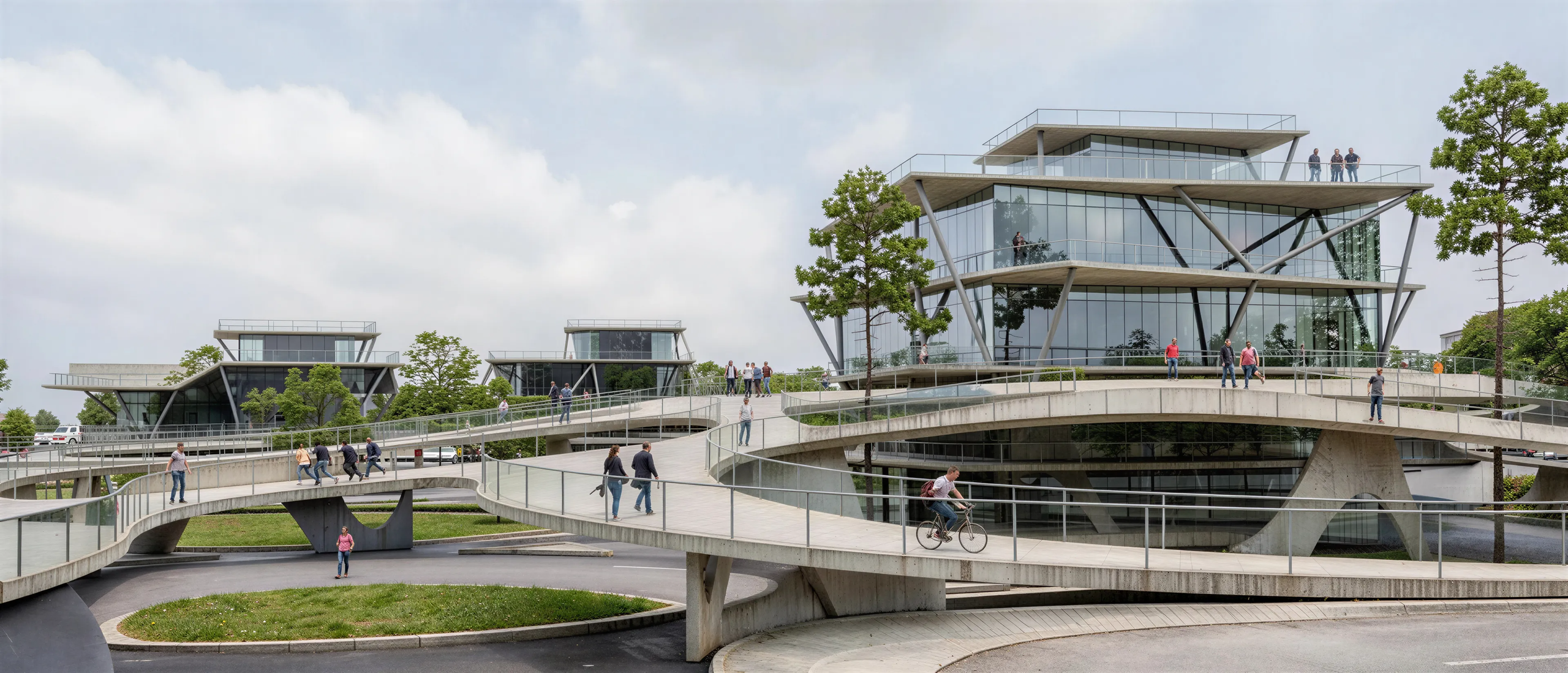
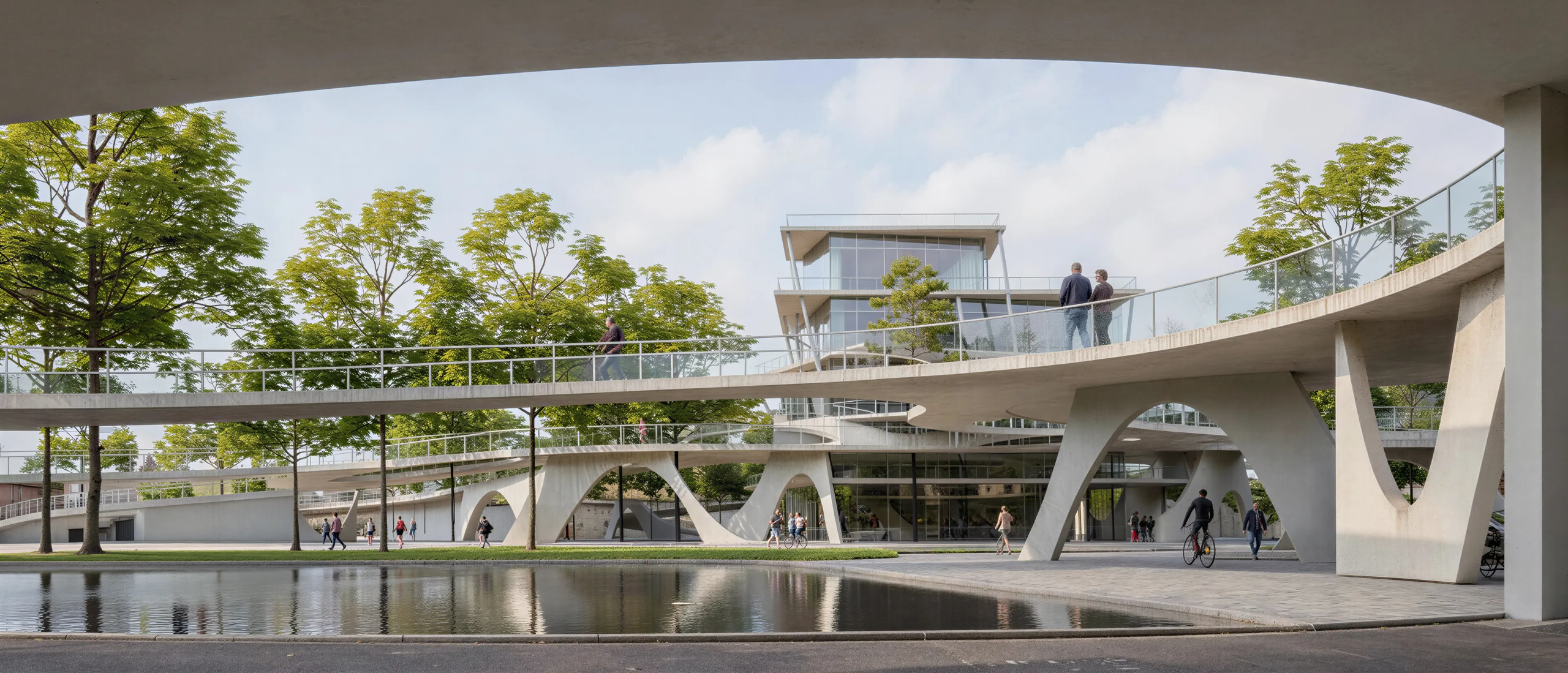
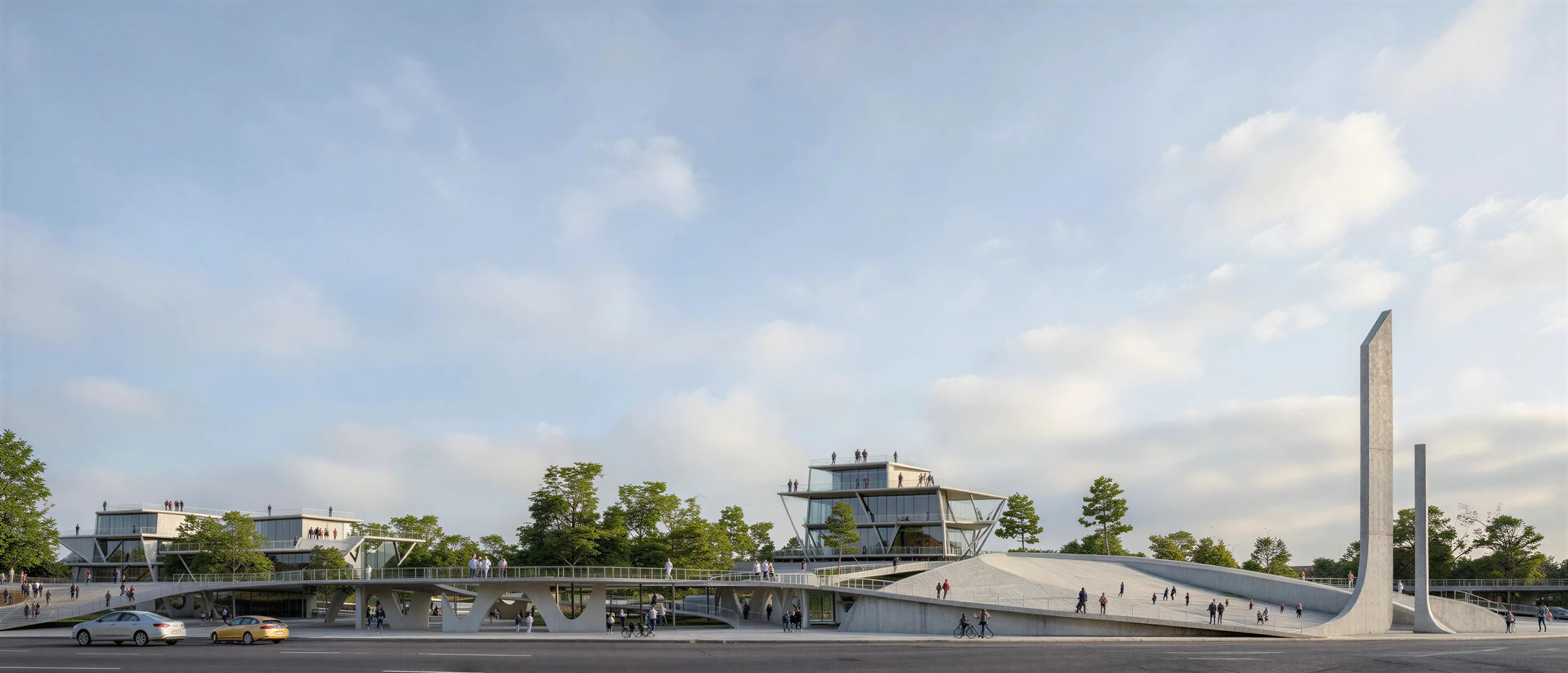
This transformation extends beyond formal expression. Pedestrian surfaces gradually rise from the ground, creating elevated paths and suspended bridges. Human movement, rather than being treated merely as a functional requirement, becomes an active force shaping the topography and spatial organization of the plaza.
The buildings and structures required by the program follow the same logic. Conventional and static architectural structures are transformed by the movement of people, as if human forces pass through the architectural framework and reshape it from within and outward.
The plaza therefore becomes not simply an empty space between buildings, but an event horizon—a spatial field whose qualities are determined by the possibility of human presence, movement, and gathering rather than by a fixed formal object.
The project seeks to establish the identity of a newly constructed city not through the addition of a historical symbol or an imposed image, but by creating the conditions for collective life to emerge. Here, architecture becomes active when people enter it, and their presence is capable of transforming the structure of space itself.
Credits
- surush ameli - architect
- soroush attarzade - architect