public
unfinished dwelling
low-budget dwelling platform
“Unfinished Dwelling” questions the extent to which architecture should determine the way people live. The project emerged from observing pilgrims who had developed a temporary way of living in tents with minimal facilities near a religious site. Rather than replacing this lifestyle with a predefined model of dwelling, the project seeks to facilitate it by providing a basic habitable platform and
- Area
- 30000 m²
- Status
- Concept
The project begins with one of architecture’s fundamental questions: to what extent can an architect influence the way people live?
Can architecture alter the collective patterns of life through the organization of a building? And if so, should such transformation be considered part of the architect’s responsibility? Or should architecture first recognize and respect existing ways of living?
The project emerged from observing a group of pilgrims who, over the years, had developed their own temporary way of staying near a religious site. Their accommodation was reduced to its most basic form: several days of living beside the street and inside tents, without private bathrooms, relying on public facilities, and preparing food within the same limited environment.
The question was not how to replace this way of living with a new and supposedly improved model. Conventional alternatives—from hotels and villa compounds to rental apartments and purpose-built pilgrim accommodation—already impose a predefined form of dwelling upon their users. But do these users have either the desire or the financial capacity to adopt such models? More importantly, should an existing way of living be transformed simply because it appears primitive?
The project begins with the assumption that temporary living in its existing form is not, in itself, the problem. The problem lies in its unintended consequences: the lack of sanitary facilities, security concerns, inadequate services, and its impact on the quality of the surrounding urban environment.
Architecture therefore takes on a different role: not to transform the way people live, but to facilitate it.
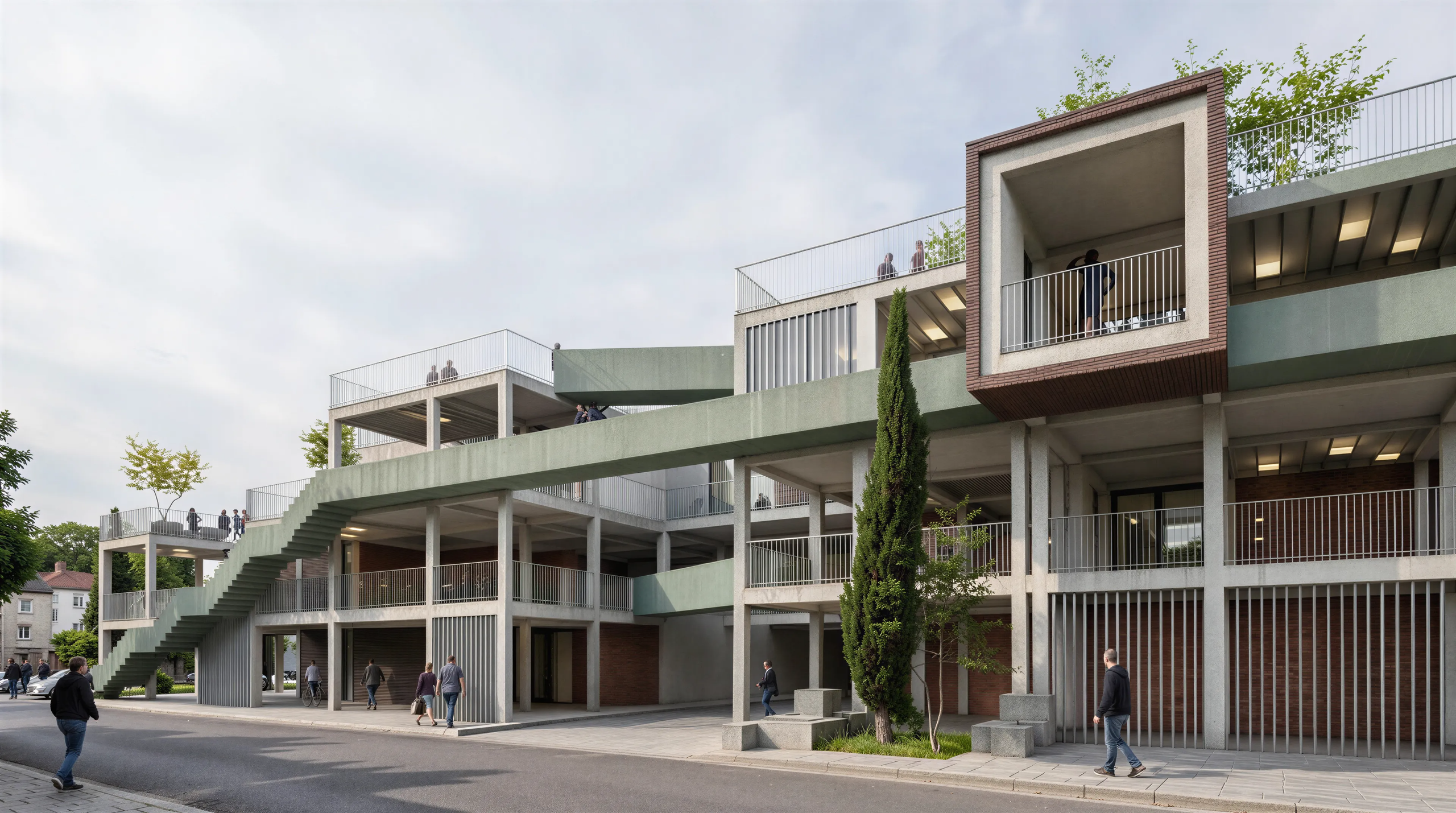
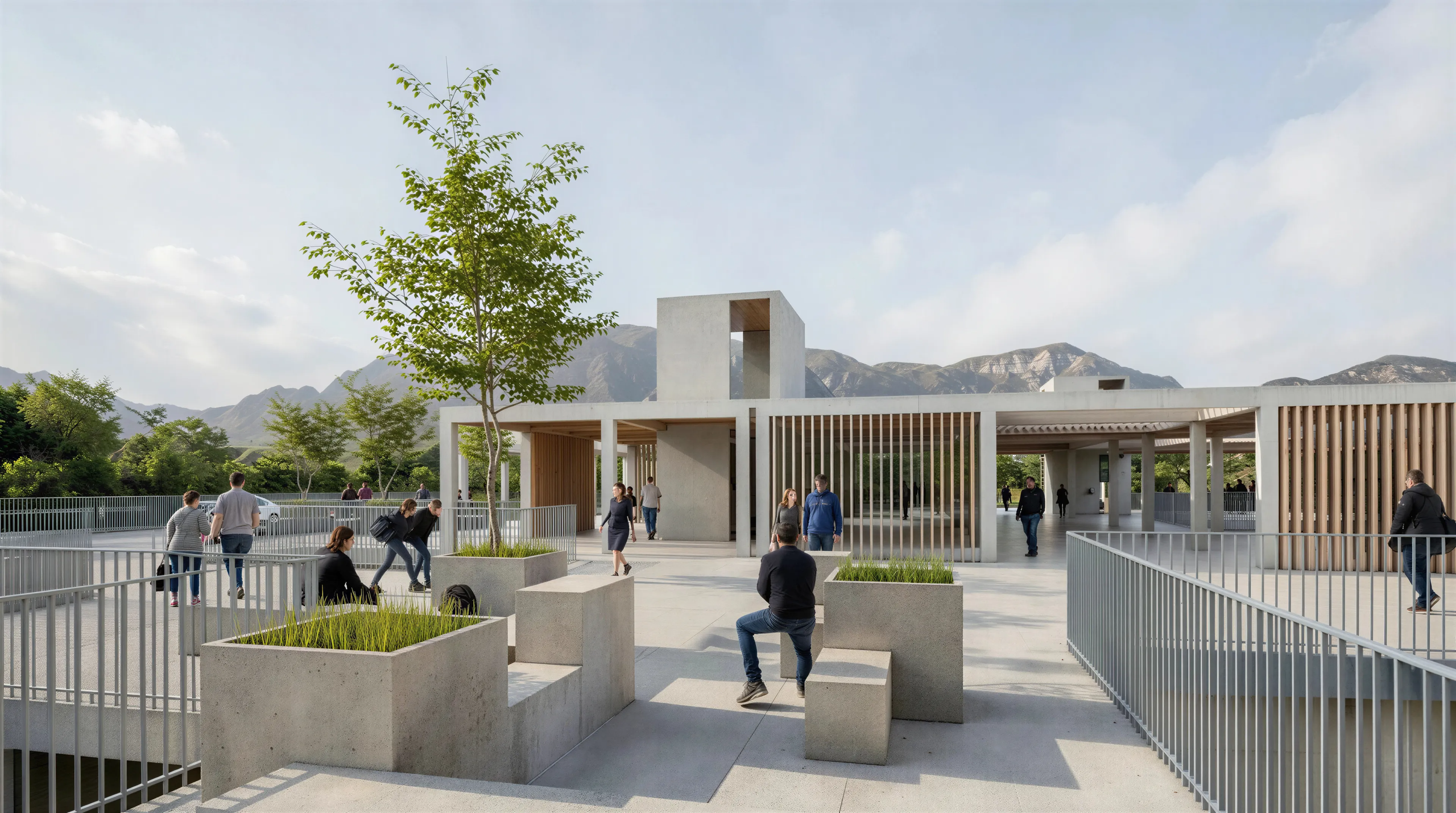
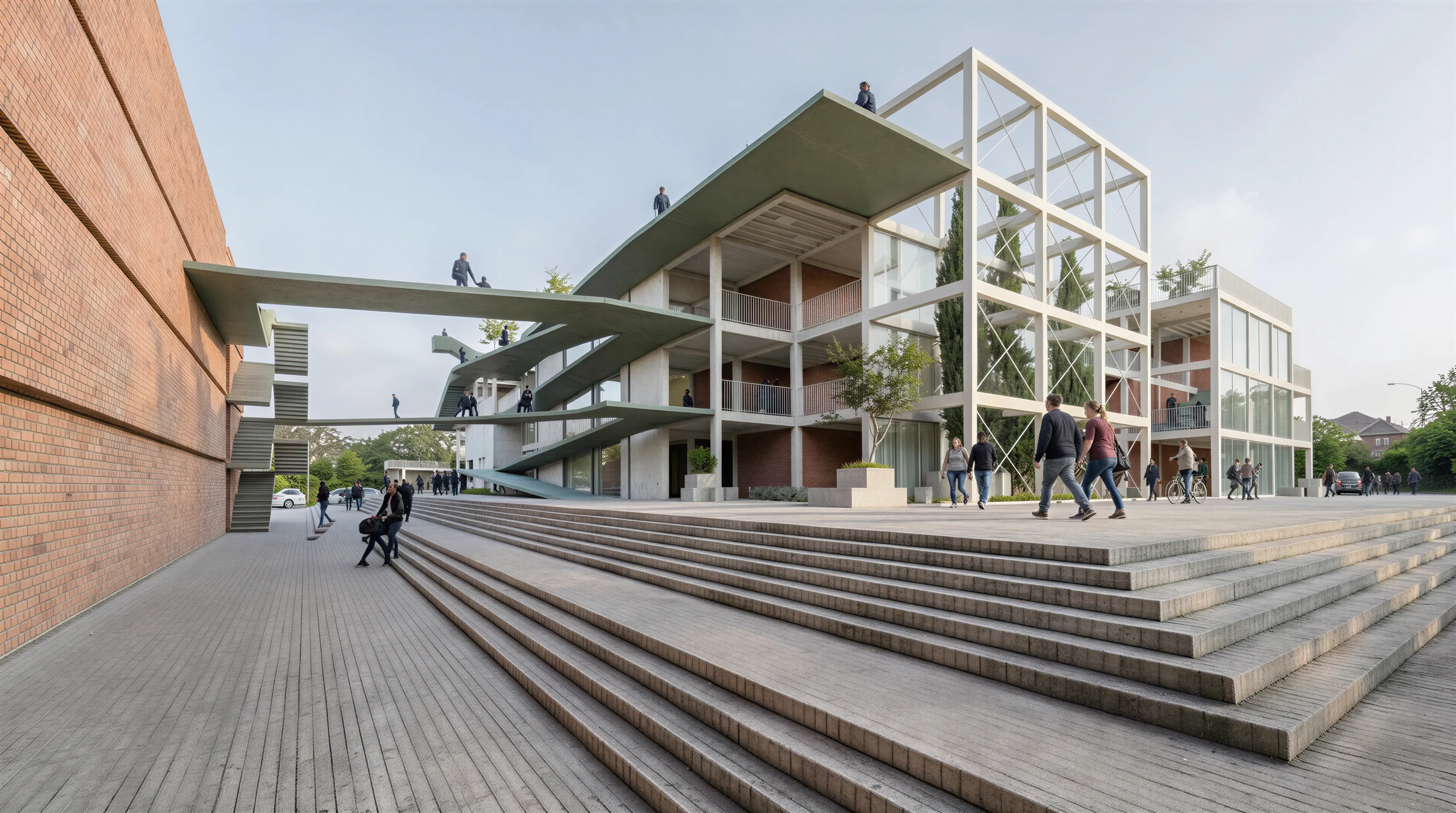
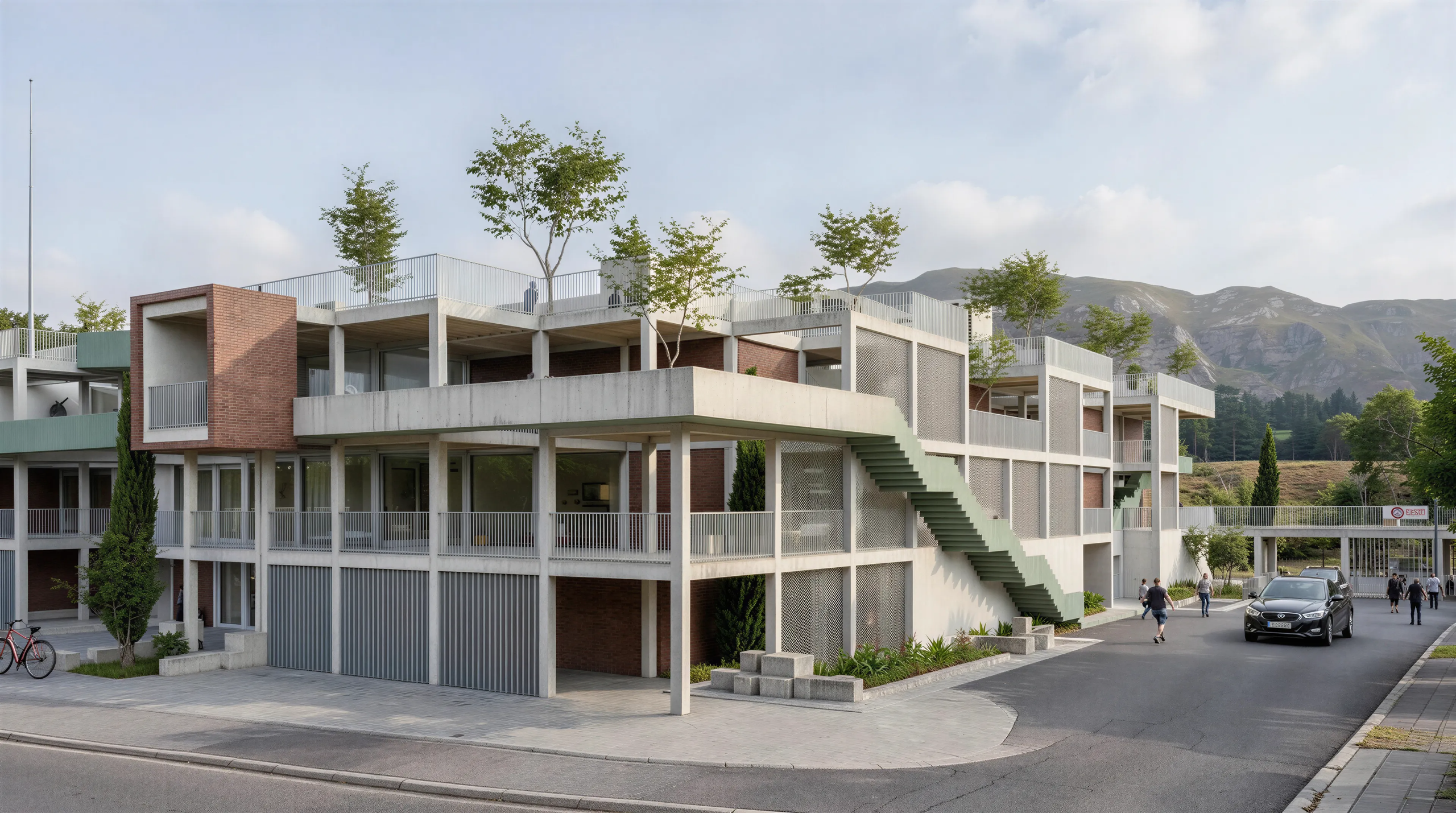
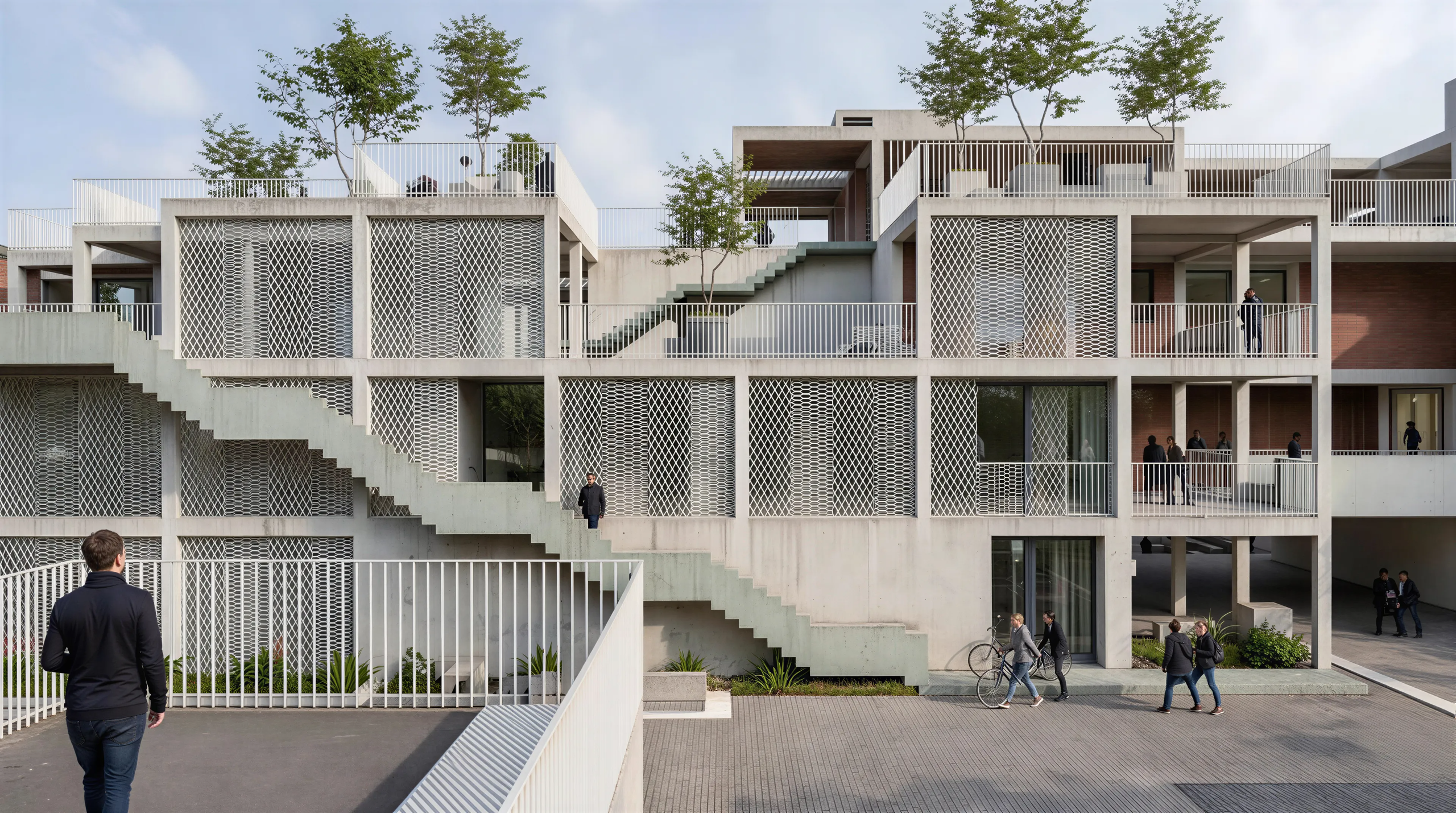
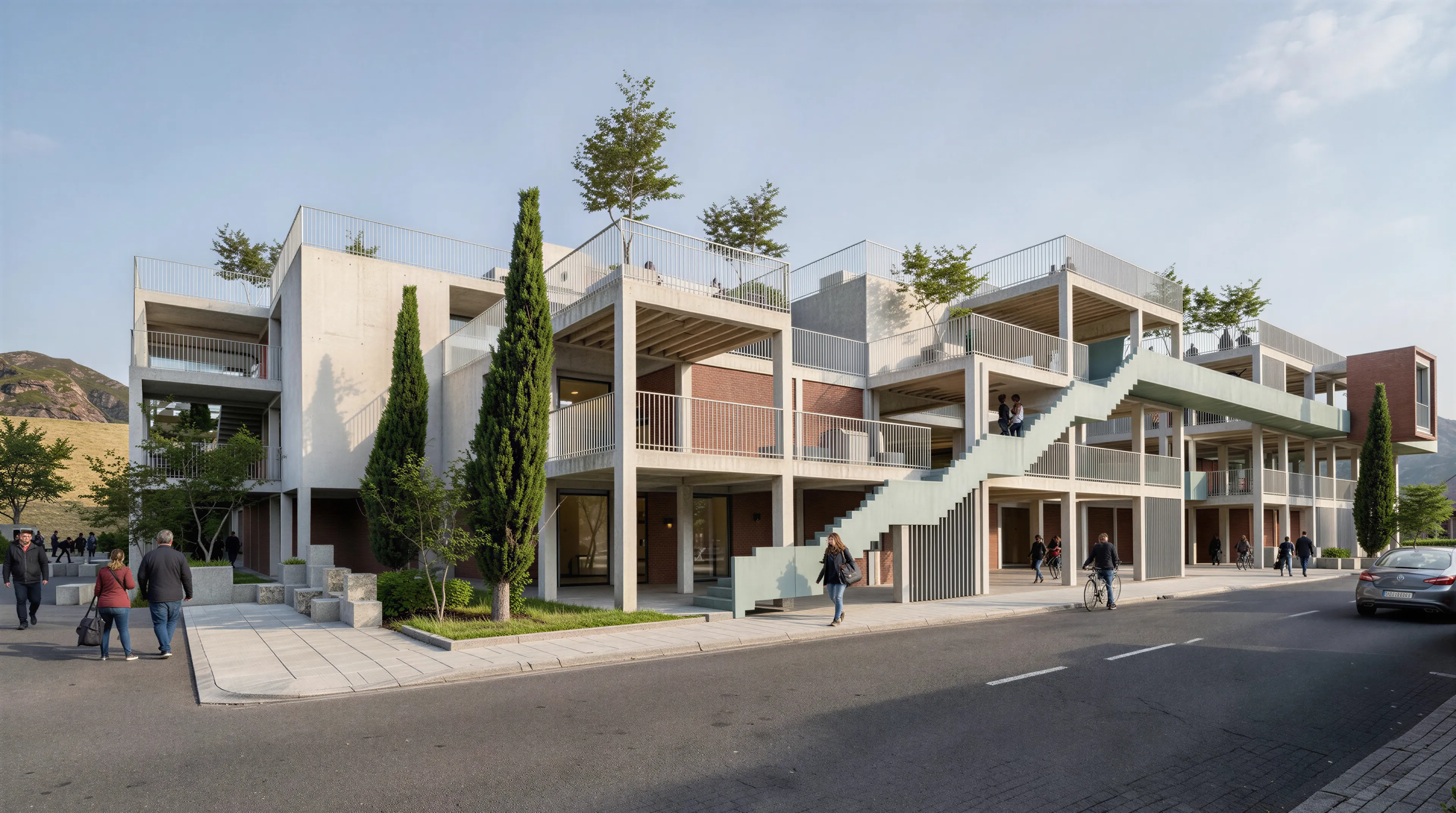
Instead of designing a complete building, the project proposes a habitable platform—a structure providing essential infrastructure and sanitary facilities while leaving the continuation of domestic life open to its users.
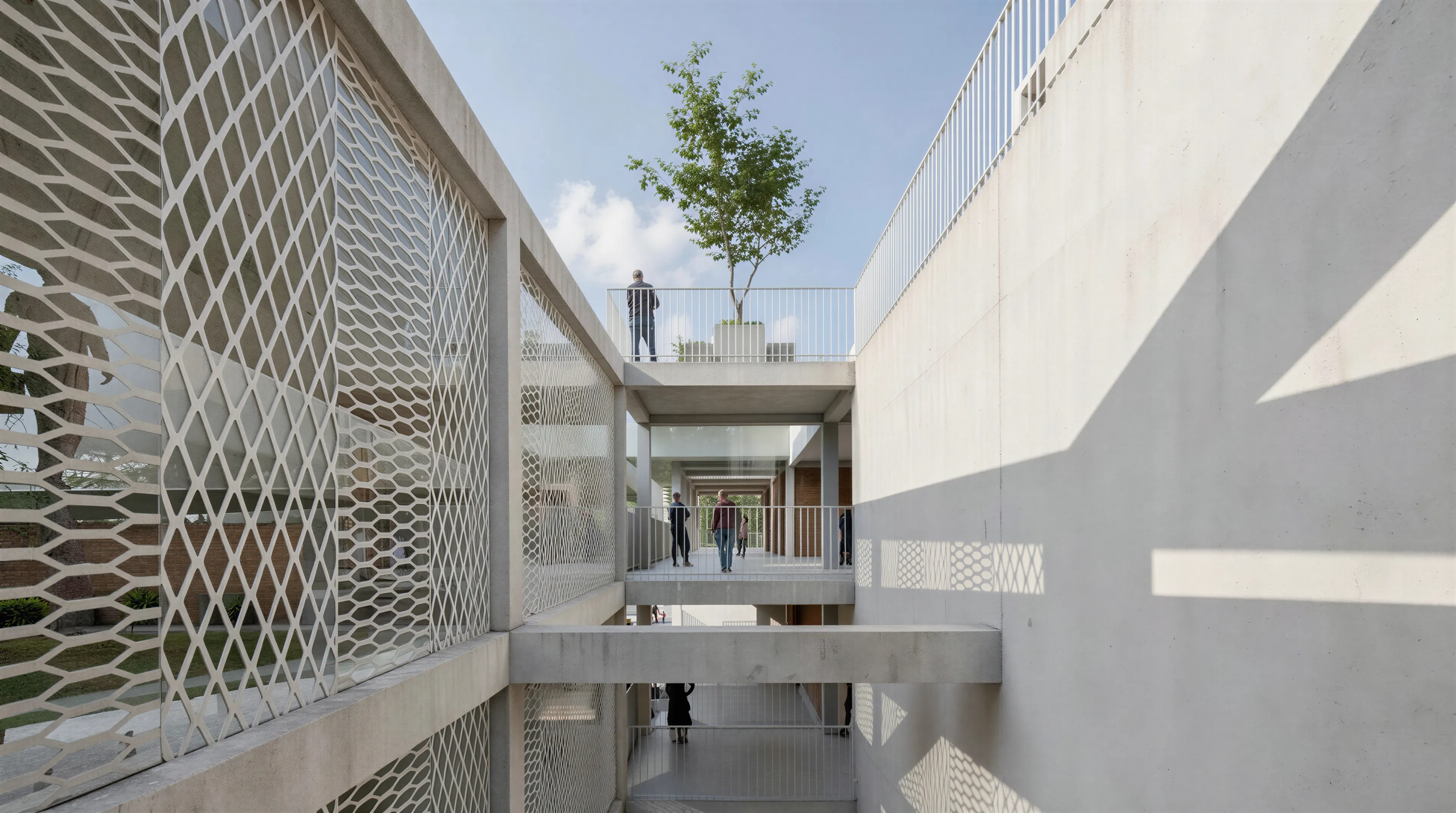
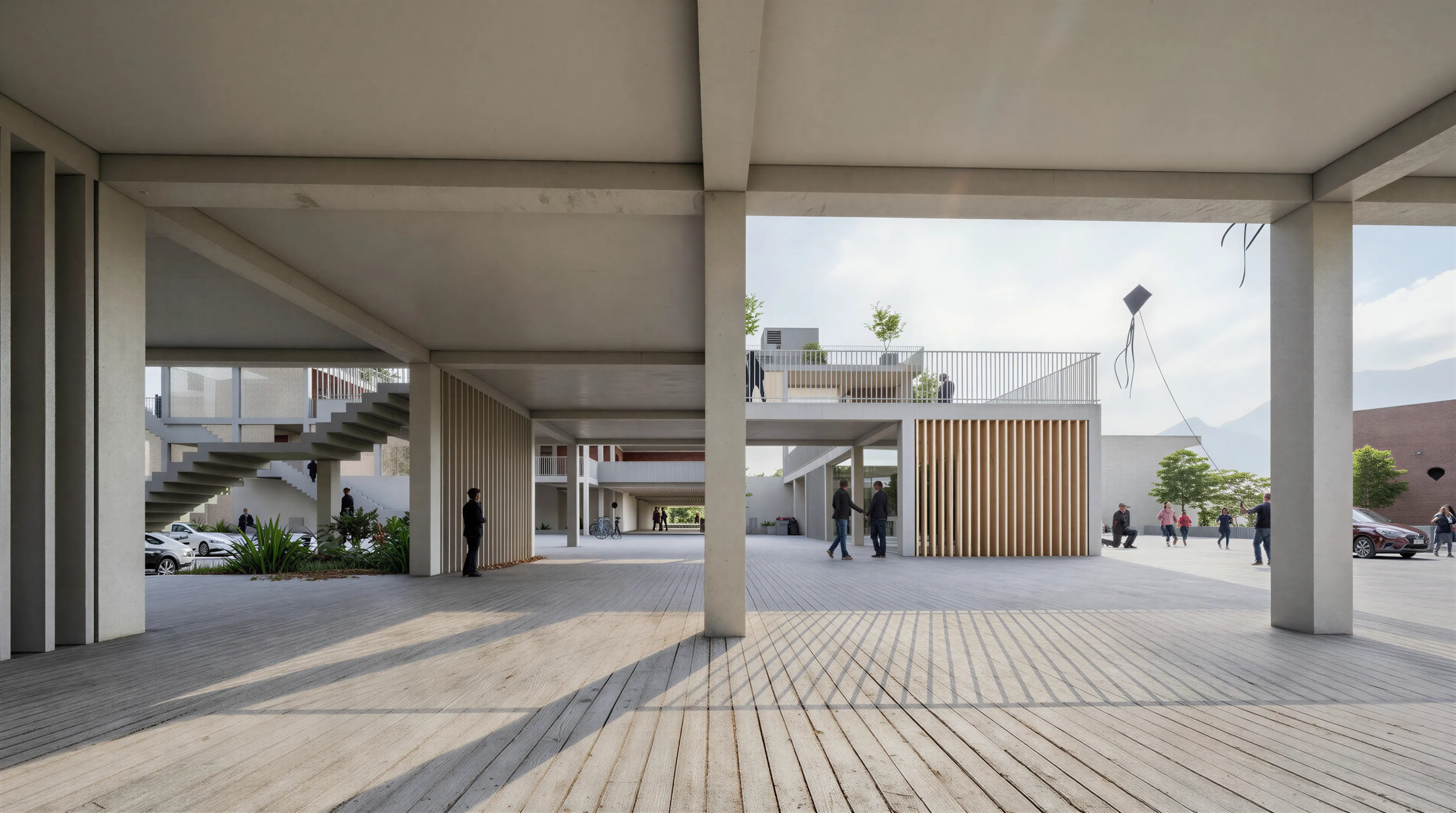
From this perspective, “Unfinished Dwelling” deliberately steps back from conventional architectural completeness. The project reduces itself to a basic framework of concrete columns, beams, floors, and vertical circulation. This reduction is not a result of insufficiency, but a means of creating possibility. The building does not prescribe a final form of living; it provides a framework that each user can complete according to their own needs, resources, and way of life.
Here, incompleteness is not a deficiency. It is part of the architectural proposition.
The project ultimately produces not a finished building, but an initial infrastructure for dwelling, leaving its continuation to the inhabitants. The human being is therefore no longer merely a user of architecture, but becomes part of the process through which architecture is completed.
“Unfinished Dwelling” seeks to reconsider the boundary between the architect’s role and that of the inhabitant: the architect establishes the initial conditions for living, while the human presence and everyday life bring the architecture toward its final state.